The scariest part about AI isn’t that it’s getting smarter… It’s that most people don’t realize it’s already replacing parts of their life.
The Age of AI: How It Is Quietly Rewriting Work, Creativity, and Human Expectations
Artificial intelligence is no longer a “future trend” sitting somewhere far away on a TED Talk slide. It is already embedded in the systems people use to write, design, edit, search, code, compose, and even imagine. Stanford’s 2025 AI Index reported that 78% of organizations were already using AI in 2024, up from 55% the year before, while private AI investment also kept rising sharply. Stanford’s 2026 AI Index says the gap between what AI can do and how prepared humans are to manage it is widening, which is probably the most important sentence in the whole conversation.
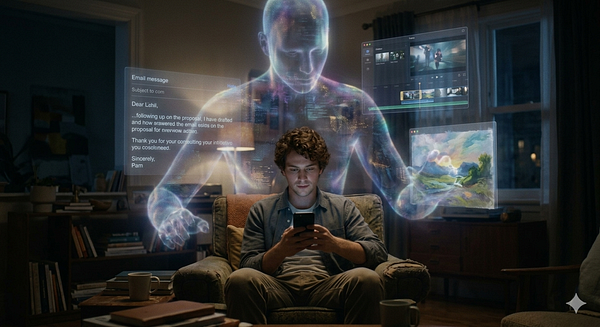
That is the real shift: AI is no longer a single tool. It is becoming a layer under everything. The IMF has already described generative AI as a structural change with wide implications for jobs, productivity, and income distribution, while the World Economic Forum’s Future of Jobs 2025 report says employers across 55 economies are already planning for major workforce transformation through 2030.
The easiest mistake is to think AI is “just software.” It is not. It is a speed layer, a creative layer, a decision layer, and increasingly a business layer. That is why it shows up in gaming, entertainment, art, fashion, music, dance, and business all at once. It is not entering one field; it is entering the operating logic of many fields.
1) Gaming: the world of play is becoming a world of generation
Gaming has always been about building worlds, but AI is changing who builds them and how fast they can be built. Unity AI now describes itself as a suite of tools that provides contextual assistance, automates tedious tasks, generates assets, and lowers the barrier to entry directly inside the Unity Editor. Unity’s own documentation says its AI assistant can help write code, fix issues, automate tasks, and generate assets such as sprites, textures, sounds, materials, and animations.
That matters because game development is not just “making a game.” It is a long chain of repeated labor: prototyping, iteration, asset production, bug fixing, balancing, animation, dialogue, and testing. Tools that compress those steps change the economics of the entire industry. Unreal Engine positions itself as the engine for games, films, and immersive experiences, which shows how the boundary between games and media is already dissolving.
What AI does here is not simply replace game developers. It changes the ratio between ideas and execution. A small team can prototype faster. A solo creator can make more polished work. Studios can test more concepts before spending full production budgets. That is why AI in gaming feels less like a feature and more like a multiplier.
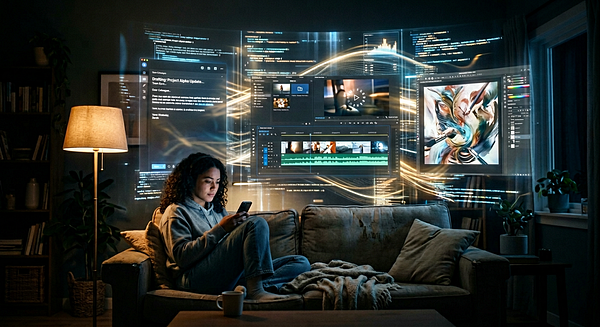
2) Entertainment and video: the production floor is being compressed
Entertainment is one of the clearest places to see the change. Adobe Firefly says it can generate images, video, audio, and designs, and its video generator can create high-quality visuals from text prompts or images, including product shots, cinematic scenes, and B-roll. Adobe also lists AI video generation, talking avatars, animation, storyboard generation, and mood boards among its core capabilities.
That is not a small update. It means the same person can move from idea to storyboard to motion to voice to soundtrack inside one workflow. For content creators and marketers, that compresses weeks of work into hours. For entertainment teams, it changes the cost of experimentation. For small brands, it lowers the barrier to producing media that once required a studio.
Higgsfield is another example of this shift. Its platform says it offers multiple AI video models in one workspace, including Sora 2, Veo 3.1, Kling, and others, and it emphasizes camera control, character consistency, motion control, and cinematic workflows. Its own site says it is used by filmmakers, marketing teams, fashion teams, content creators, and educators.
The example especially revealing: Higgsfield’s , just posted a post on X says, “We just made a 23-MINUTE sci-fi pilot in 4 days. And it is 100% AI.” That is the kind of sentence that tells you the ground has shifted. Whether every frame is perfect is not the main point. The point is that the production timeline itself has been rewritten. see for your selves 👉🏼(X (formerly Twitter))
3) Art and design: the blank page is no longer blank
Art used to begin with empty space. Now it often begins with a prompt. Adobe Firefly explicitly supports AI art generation, AI character generation, painting, comic styles, graffiti, anime, and image editing tools like generative fill and image-from-image workflows. That means the first draft of a visual idea can be produced, iterated, and reshaped before a human ever touches a final polish.
This changes the psychology of creative work. The artist is no longer only making from scratch; the artist is also curating, directing, and selecting. In practical terms, that means creative value shifts upward: taste, composition, concept, and brand direction become more important than raw manual effort. AI does not erase art. It changes where the effort sits.

This is also why the market for “creative execution” is changing. The scarce thing is not always the ability to generate another image. The scarce thing is the ability to decide what should exist, why it should exist, and what should be kept out. That is a very human skill, and AI makes it more important, not less.
4) Fashion: AI is turning aesthetics into a production system
Fashion is a particularly interesting field because it sits at the edge of identity, branding, photography, and commerce. Higgsfield’s Soul 2.0 is described on its site as a “culture-native photo model built for fashion, aesthetics, and creative expression.” Its broader platform also includes Fashion Factory, Soul ID Character, and multiple image and video workflows aimed at visual consistency and style control.
That matters because fashion is not just clothing. It is image-making. A brand is selling mood, aspiration, identity, and visual consistency. AI helps compress the cost of testing looks, generating campaign visuals, and exploring identity-driven styles without constant reshoots. It makes fashion more like a real-time media system.
The deeper change is that fashion teams can now prototype the “vibe” before the physical product is even in full circulation. That means design, marketing, and brand direction can start to move together instead of one waiting for the other. The business advantage is speed, but the cultural effect is bigger: aesthetics become iterative software-like objects rather than only physical and seasonal ones.
5) Music and voice: sound is becoming promptable
Music is another field where AI is no longer theoretical. Suno describes itself as an AI music generator that can create original music in seconds. Adobe Firefly also says it can generate music, sound effects, speech from text, and dubbed audio, which means audio production is now part of the same generative stack as image and video production.
This changes the meaning of “making music.” The old version required instruments, recording setups, mixing time, and often a full production team. The new version can start with a mood, a lyric idea, or a reference clip. That does not make musicians useless. It makes the role of a musician more layered: songwriter, sonic curator, prompt writer, arranger, and emotional director all begin to overlap.
Voice is changing too. Tools that generate speech, narration, dubbing, and voiceovers are making it easier to localize content, explain products, and create multi-format media without re-recording everything from scratch. That is a huge shift for creators, educators, brands, and entertainment teams alike.
6) Dance and performance: motion itself is becoming editable
Dance is not always talked about separately, but AI is already touching it through motion control, avatar systems, lip-syncing, and generated performance footage. Higgsfield explicitly lists motion control, talking avatars, and create-video tools as part of its workflow, and describes precise control over character actions and expressions. Adobe Firefly similarly includes animation, talking avatars, and video generation.
That matters because dance and performance are usually tied to bodies, timing, and expression. When AI can simulate motion, refine movement, or generate performance-like visuals, the line between choreography, animation, and synthetic performance gets blurrier. This is not the same as replacing human dancers. It is a new layer of performance media where movement becomes editable in the same way text already is.
The human implication is subtle. If motion can be generated, then rehearsal, camera placement, performance testing, and conceptual visualization all change. The creative process becomes more fluid, but also more competitive, because the standard for what counts as “good enough to publish” rises very quickly.
7) Business: AI is not just helping work, it is reshaping the baseline
This is where the impact becomes impossible to ignore. The IMF says AI is likely to complement human work in many cases, even as some jobs are replaced, and frames generative AI as something that will transform the global economy. Stanford’s AI Index reports that AI business usage has accelerated sharply, and the World Economic Forum says employers expect major labor-market disruption and transformation through 2030.
The research evidence is already strong that AI can boost productivity. A 2023 MIT experiment found that generative AI improved productivity on mid-level professional writing tasks. A field experiment with highly skilled workers found a “jagged technological frontier,” meaning AI helps a lot on some tasks and much less on others. A 2025 study on software developers found productivity impacts in randomized controlled trials at Microsoft, Accenture, and a Fortune 100 company.
This matters because AI does not just speed up work; it changes who can do the work at all. Less experienced workers often get the biggest lift, while top performers can sometimes gain less from the same tool. In plain language, AI can flatten skill gaps in some situations, but it can also widen the gap between people who know how to use it well and those who do not. That is exactly the kind of “jagged” change the research describes.
By 2030, the World Economic Forum projects 170 million new jobs created and 92 million displaced, resulting in a net gain of 78 million jobs, but with major disruption along the way. That number does not mean life becomes easy. It means the economy reshapes itself, and people will need to move with it.
8) The psychology of all this: AI changes what humans expect from themselves
The most important psychological effect of AI may be this: once people get used to fast drafts, fast images, fast code, fast research, and fast edits, their tolerance for slow work drops. That is not just a tech shift. It is a mental shift. The brain starts to expect frictionless output, and ordinary human effort can begin to feel frustratingly slow. That conclusion is an inference from the rapid productivity gains and workflow compression documented in the studies and product systems above.
There is also a quieter effect: AI can make people feel either more capable or more replaceable. For some, it becomes a confidence engine. For others, it becomes a mirror showing exactly how much of their work was repetitive, procedural, or easy to automate. Both reactions are human. Both are real. And both are already part of the AI era.
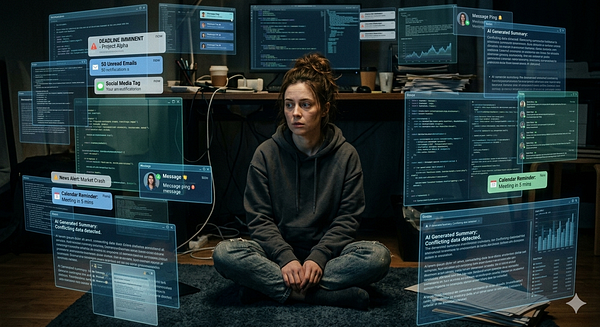
This is why “AI literacy” is not the end goal anymore. Knowing what AI is no longer enough. The real advantage comes from using AI to think better, build faster, test more, and make sharper decisions. Stanford’s 2026 AI Index specifically warns that capability is outrunning governance and measurement, which means individuals and companies that learn faster will have an edge for a long time.
9) The uncomfortable truth: AI is also changing where value goes
When people say AI is “taking jobs,” that is only part of the story. More precisely, AI is taking slices of work. It is taking first drafts, routine tasks, repetitive edits, repetitive analysis, and some forms of standard content production. The value then moves upward to the people who can combine AI with judgment, taste, strategy, and distribution. That is the deeper economic story implied by the productivity studies and the platform models already in market.
This is also why some companies appear to be “making money while sitting.” The phrase is emotionally understandable, but the real mechanism is simpler: they are packaging AI into workflows people pay for. Adobe packages image, video, audio, and design generation. Unity packages AI into game development. Higgsfield packages multiple models, camera control, and creative workflows into one workspace. The money often goes to whoever turns raw intelligence into a usable product.
That is not passive wealth. It is platform leverage. The company that owns the workflow, the interface, the data, or the distribution can capture more value than the company doing raw labor. AI accelerates this because it turns output into a scalable service layer.
10) The bigger human question
The real question is not whether AI will “take over everything.” The real question is: what happens when AI becomes the default layer in almost every field? The answer is already visible. Games will be prototyped faster. Videos will be generated faster. Music will be sketched faster. Ads will be assembled faster. Support work will be handled faster. And people who never use AI directly will still feel its effects because the standard for speed, polish, and output has already changed. That is an inference supported by the adoption and productivity evidence above.
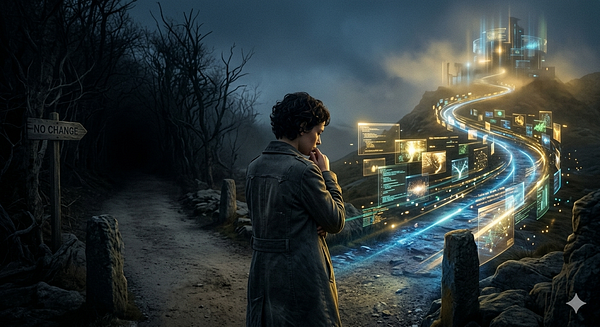
That is why AI feels so personal. It is not just entering industries. It is entering identity. It changes how people see their own skill, how employers measure value, how teams collaborate, and how audiences judge what looks “professional.” It also changes creative ambition. A person who once needed a full team to publish can now attempt work that used to be inaccessible. That is thrilling, but it is also destabilizing.
So the smartest response is not panic and not blind hype. It is adaptation. Learn the tools. Learn the limits. Learn the economics. Learn the psychology. Because the next decade will not be about whether AI exists. It will be about who understands how to work with it before the new baseline becomes normal.


Comments